
How Does Speech Therapy Work, Anyway? SLPs as Neurological Engineers
⚙️ How Does Speech Therapy Work, Anyway?
When you think of speech therapy, you might picture games, flashcards, or kids repeating sounds—but underneath it all, something incredible is happening inside the brain.
Every speech session is a workout for the neural networks that make communication possible.
🧠 The Brain at Work
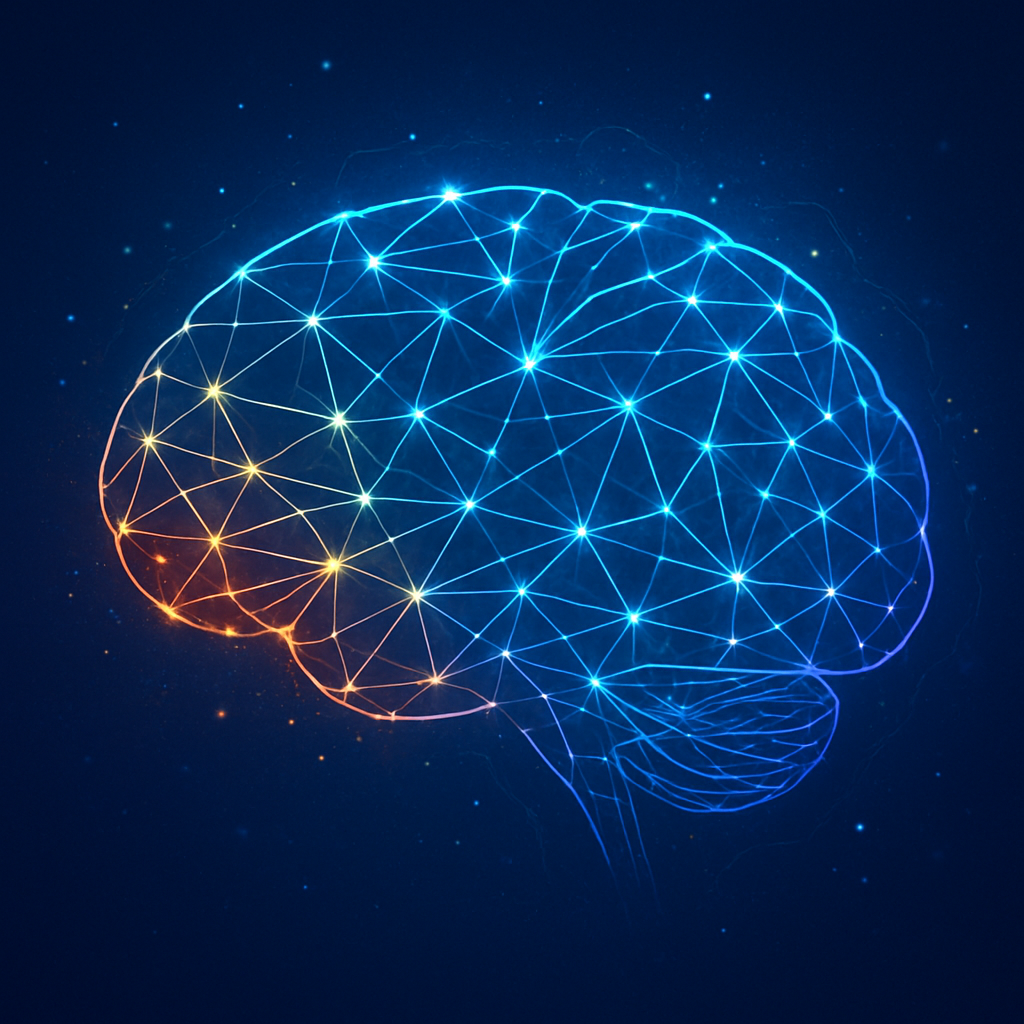
The human brain is made up of billions of neurons—tiny cells that communicate through electrical and chemical signals. When we practice a skill repeatedly, those neurons reach out to one another and form connections called synapses.
The more those pathways are activated, the stronger and faster they become. That’s how learning takes root.
In speech therapy, every sound, word, and movement of the mouth triggers the brain to strengthen specific neural routes—essentially, building bridges for communication.
🪜 Building Bridges in the Brain

Think of these pathways like bridges across a wide bay. At first, the brain must build a boat to get across—a slow, clumsy process that takes effort and focus. With practice, the brain starts to lay down a bridge—piece by piece, connection by connection—until the route becomes stronger and faster.
Once that bridge is complete, information can travel like traffic on a superhighway: smooth, automatic, and efficient.
That’s why frequency and correct practice matter so much. Each accurate production of a sound reinforces that neural bridge, turning conscious effort into fluent communication.
⚡ The Science of Speech Motor Learning
Speech therapy—especially for speech sound disorders and childhood apraxia of speech—is guided by the principles of motor learning. Research shows that high repetition and meaningful practice (50–100 correct trials per session) are essential for the brain to wire new, lasting patterns.
As Kleim & Jones (2008) famously summarized: “Neurons that fire together, wire together.”
This is why therapy is structured, data-driven, and filled with opportunities to practice—because every repetition is a chance for the brain to grow.
💫 The Role of Emotion and Engagement
But repetition alone isn’t enough. The emotional state of the learner determines whether those connections stick.
When a child feels safe, supported, and engaged, their brain produces the neurochemicals that promote learning—dopamine, serotonin, and oxytocin.
If they feel anxious or pressured, the opposite happens: the brain shifts into protection mode, and learning slows.
That’s why we combine structure with warmth. Joy, laughter, and curiosity aren’t just nice—they’re neurological accelerators.
🌉 Speech Therapists as Neurological Engineers
At CloudSpeech, we see speech-language pathologists as neurological engineers—carefully selecting targets, guiding precision practice, and building the emotional scaffolding that helps children’s brains reorganize and thrive.
Every exercise, every sound, and every moment of connection contributes to a new architecture in the brain.
🎥 Watch It Happen
Below is a time-lapse video showing real neurons reaching toward each other and forming connections under a microscope.
It’s the same kind of growth that happens invisibly every time your child practices speech.
🌈 The Takeaway
Speech therapy is more than articulation drills. It’s applied neuroplasticity—the science of helping the brain change itself through experience, emotion, and practice.
We’re not just teaching sounds.
We’re building bridges in the brain.
💙 Speech therapy works because the brain is built to grow.
References
- Kleim, J. A., & Jones, T. A. (2008). Principles of experience-dependent neural plasticity: Implications for rehabilitation after brain damage. Journal of Speech, Language, and Hearing Research, 51(S1), S225–S239.
- Maas, E., Robin, D. A., Hula, S. N., Freedman, S. E., Wulf, G., Ballard, K. J., & Schmidt, R. A. (2008). Principles of motor learning in treatment of motor speech disorders. American Journal of Speech-Language Pathology, 17(3), 277–298.
- Guenther, F. H. (2006). Cortical interactions underlying the production of speech sounds. Journal of Communication Disorders, 39(5), 350–365.
- Kuhl, P. K. (2004). Early language acquisition: Cracking the speech code. Nature Reviews Neuroscience, 5(11), 831–843.