
Phonological Disorders in Children: What's Normal, What's Not, and Why Kindergarten Is the Turning Point
When a two-year-old says "tat" for cat or "doh" for go, nobody is concerned. They shouldn't be. Young children simplify speech sounds as their brains and mouths catch up to the complexity of language. These simplifications are called phonological processes, and they are a completely expected part of early development.
The question worth asking — and the one that doesn't always get asked early enough — is when those patterns should be gone.

What Is a Phonological Disorder?
A phonological disorder is not a single sound error. It is a pattern — a consistent rule a child applies to a whole class of sounds, changing how their speech is organized.
Some of the most common patterns include:
Fronting — replacing sounds made in the back of the mouth with sounds at the front. "Tat" for cat. "Doh" for go. The back sounds /k/ and /g/ are replaced with front sounds /t/ and /d/.
Stopping — replacing continuant sounds like F, V, S, SH with stop sounds like P, B, T, D. "Tun" for sun. "Pish" for fish.
Cluster reduction — simplifying consonant clusters by dropping one sound. "Pay" for play. "Top" for stop.
Final consonant deletion — dropping the last sound off words entirely. "Ca" for cat. "Ba" for ball.
Weak syllable deletion — omitting unstressed syllables. "Nana" for banana. "Puter" for computer.
Every one of these patterns is normal in a toddler. The clinical question is whether they persist past the age at which they are expected to resolve.
What the Norms Actually Say
According to ASHA and current research including the cross-linguistic norms established by McLeod and Crowe (2018, 2020), children acquire most speech sounds by age five. Here is a general guide for when the most common phonological processes should be eliminated:
By age 3: Final consonant deletion and weak syllable deletion should be largely resolving. A child should be understood by familiar adults most of the time.
By age 3 to 3.5: Stopping of early sounds should be disappearing. Fronting should be resolving or gone.
By age 4: Most stopping, fronting, and assimilation patterns should be resolved. Unfamiliar adults should understand most of what a child says.
By age 4 to 4.5: Cluster reduction should be largely resolved.
By age 5: According to ASHA's own practice portal, most phonological processes should be eliminated by age five. Processes that persist beyond this point — or patterns that were never typical in the first place, like backing — indicate a phonological disorder, not a phase.
In typically developing speech, all phonological processes should be eliminated by age six to seven at the latest (Bowen, 2011; Peña-Brooks & Hegde, 2015). A child entering kindergarten at five who is still using multiple consistent patterns is outside the expected window.
When Should Parents Think About a Referral?
If a child is approaching the end of preschool — around age four to four and a half — and a parent or teacher notices consistent, patterned speech errors that aren't resolving, that is a reasonable time to seek an SLP evaluation before kindergarten begins.
An evaluation before kindergarten entry gives a child and family the most time to address any disorder before formal reading instruction starts. That timing matters — and the next section explains why.
Why Kindergarten Is the Turning Point
Here is something that often surprises parents.
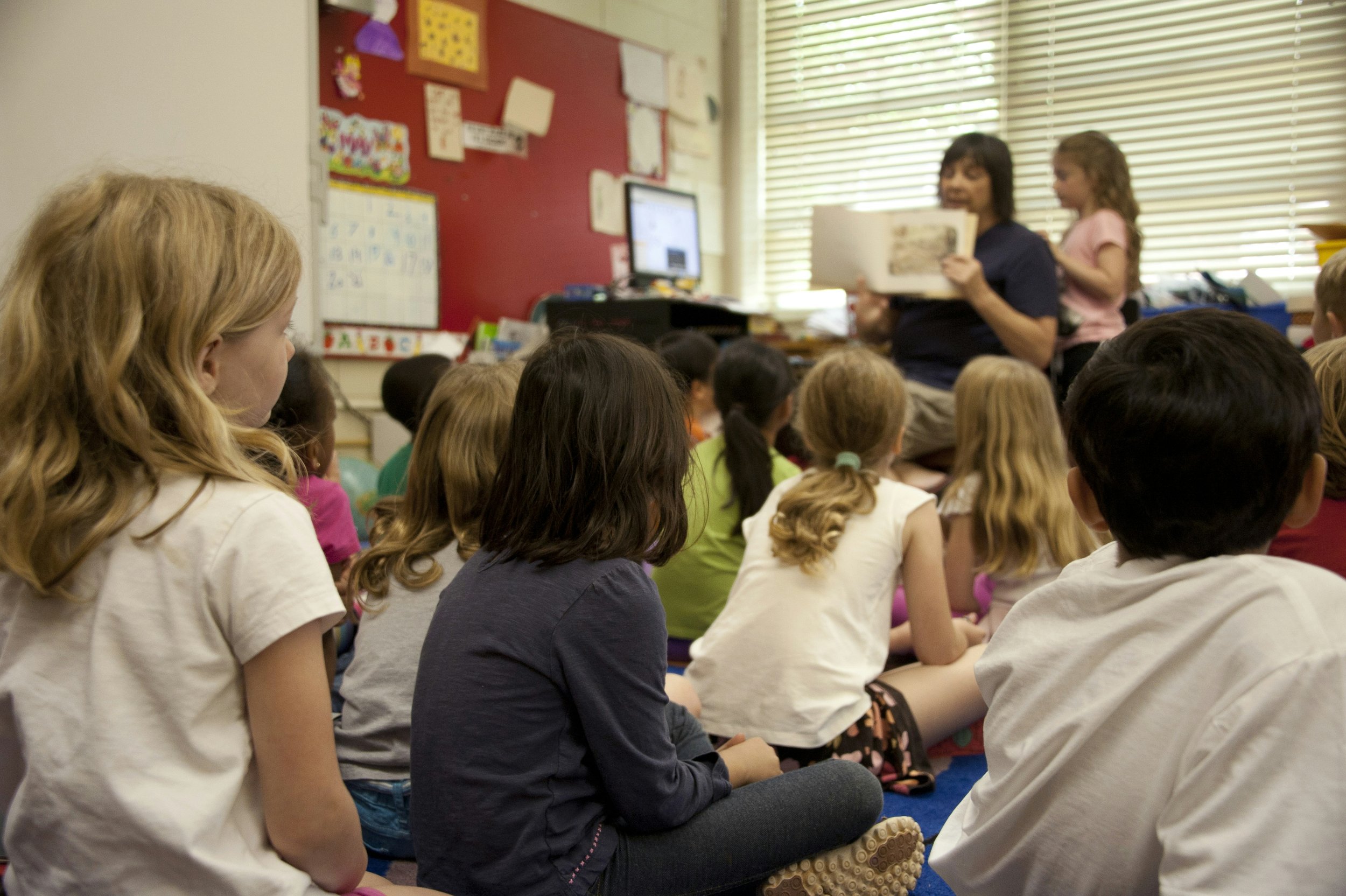
The same system a child uses to organize speech sounds is the same system they will use to learn to read and spell. It is called phonological awareness — the ability to hear and manipulate the individual sounds in words.
Phonological awareness is what allows a child to understand that "cat" has three separate sounds, that "bat" and "cat" rhyme, and that swapping the first sound turns "cat" into "hat." It is the foundation of early decoding — the skill that connects spoken language to letters on a page.
Research published in ASHA journals confirms that phonological processing skills in kindergarten-age children are a direct indicator of future reading ability. A longitudinal study following 570 children found that kindergarten phonological awareness predicted second-grade word reading beyond what letter identification alone could predict.
The connection to spelling is equally direct. Spelling requires a child to take a spoken word, break it into sounds, and match each sound to a letter. A child whose phonological system is still disorganized at school entry may apply those same patterns in writing — dropping final sounds, substituting sounds, simplifying clusters — because their internal map of spoken language doesn't yet match what they're being asked to put on paper.
Research published in the Journal of Speech, Language, and Hearing Research found that children with speech sound disorders entering kindergarten with weak phonological awareness were at elevated risk for reading difficulties — and those difficulties were likely to persist across the school year.
This does not mean every child with a phonological disorder will struggle to read. Children with isolated speech sound disorders — without broader language difficulties — generally have better literacy outcomes. But a child who enters kindergarten still producing multiple consistent patterned errors is carrying a risk into the most important phonological transition of their early education. Addressing it before that window closes is worth taking seriously.
Why School Services May Not Be Enough
This is where many families get stuck.
Even if a child has a phonological disorder, they may not qualify for speech services through their public school. School eligibility under IDEA requires that a disorder adversely affects educational performance — a threshold that many children with phonological disorders don't meet on paper, particularly if their academic performance is still on track in early kindergarten.
But not qualifying for school services does not mean intervention isn't warranted. It means the school's eligibility criteria don't capture the full clinical picture.
A child who doesn't qualify for school speech but who enters kindergarten with persistent phonological patterns, below-average phonological awareness, and emerging literacy demands is a child who would benefit from private specialist care — even if the school system doesn't see it yet.
What Treatment Looks Like
Phonological disorder therapy works at the level of the pattern, not the sound. Rather than targeting one sound at a time — the traditional articulation approach — a phonological approach targets the underlying rule the child has been applying, reorganizing the whole system.
Evidence-based approaches include the Cycles Approach, Minimal and Maximal Oppositions, and the Complexity Approach. Research supports that treating a phonological pattern often produces change across an entire class of sounds — not just the specific targets worked on in sessions. Earlier implementation consistently produces better outcomes.
At CloudSpeech, we see children ages 5 and up across Texas via teletherapy, after school and on weekends. Two sessions per week is our standard. We move to intensive cycles of three to four sessions per week when a child's severity and schedule warrant it.
What to Do If You're Concerned
If your child is four or four and a half and still using consistent patterned speech errors — or if they are entering kindergarten and their speech is still frequently misunderstood by new adults — an evaluation is worth pursuing now rather than waiting for the school to flag it.
A free parent consultation is a good first step. We'll talk through what you're hearing, whether it fits the profile of a phonological disorder, and whether CloudSpeech is the right fit for your child.
Christina Burnham, MS CCC-SLP Founder, CloudSpeech: Online Therapy cloudspeech.com | 512-765-4554